IMBT System
Gold-DOT
Fiducial01 / 01

Gold powder-polymer (PMMA) composite — gold content ~1/20 of conventional pure-gold markers (prototype-confirmed)
CT visibility: 7,013 HU measured in prototype → development target ≥7,200 HU
Proton beam dose reduction: 8.5% measured in prototype → development target ≤7%
Carbon-ion beam dose reduction: 7.2% measured in prototype → approaching target ≤7%
CT distortion pixel ratio: 23% measured in prototype → development target ≤15%
Anti-migration structure — stable positional reproducibility throughout fractionated treatment
Joint MOU research ongoing with Gunma University Hospital, Japan
Coming Soon
Gold powder-polymer composite marker for prostate cancer particle therapy — prototype testing confirmed 7,013 HU CT visibility, 8.5% proton and 7.2% carbon-ion dose reduction vs. up to 44.3% for pure-gold markers, with development targets of ≥7,200 HU and ≤7%.
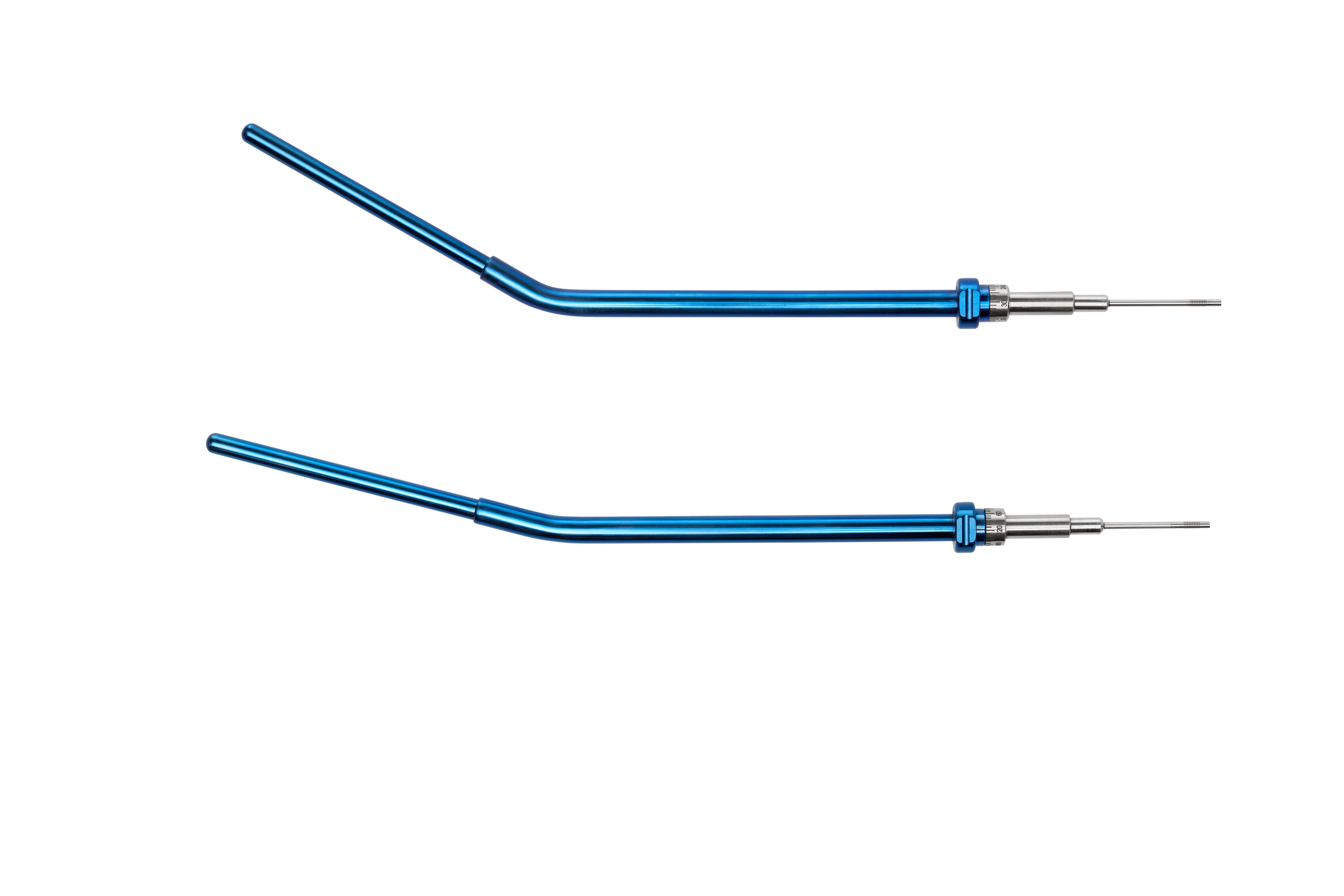
Gold-DOT is a next-generation tumor localization marker designed to overcome the limitations of conventional pure-gold markers in particle radiation therapy for prostate cancer. Manufactured as a gold powder-polymer (PMMA) composite, it achieves a gold content of approximately 1/20 that of conventional pure-gold markers — confirmed in preliminary prototype testing. The technical foundation is a peer-reviewed 2009 paper by the RaphaRAD founding team (Lim et al., Int. J. Radiation Oncology Biol. Phys., Vol. 74, No. 5) demonstrating that conventional pure-gold markers attenuate proton beams by up to 44.3%, while a gold powder-based approach can suppress dose interference to approximately 5% or below.
Preliminary prototype testing confirmed: CT visibility of 7,013 HU, proton beam dose reduction rate of 8.5%, and carbon-ion beam dose reduction rate of 7.2% — already approaching commercially competitive levels. Current development targets are CT visibility ≥7,200 HU, proton/carbon-ion dose reduction ≤7%, and CT distortion pixel ratio ≤15%, to be validated at the National Cancer Center and KOLAS-accredited institutions.
Joint R&D is underway with Gunma University Hospital (Japan) via MOU, and the minimal gold content delivers significant cost competitiveness for particle therapy centers.
- Particle therapy tumor tracking: prototype confirmed 7,013 HU CT visibility (target ≥7,200 HU) and proton dose reduction 8.5% / carbon-ion 7.2% (target ≤7%)
- CT distortion pixel ratio 23% in prototype — development target ≤15% for more accurate treatment planning
- Gold content ~1/20 of conventional pure-gold markers (prototype-confirmed) — significant cost advantage for particle therapy centers
- Anti-migration fixation structure ensures stable position reproducibility across all fractions
Related portfolio
Explore adjacent products in the same broader company story
The detailed view should not dead-end. It should help users move across delivery, QA, and protection contexts without losing orientation.
Proton Therapy
Pro-MI
Brachy QA
BIM